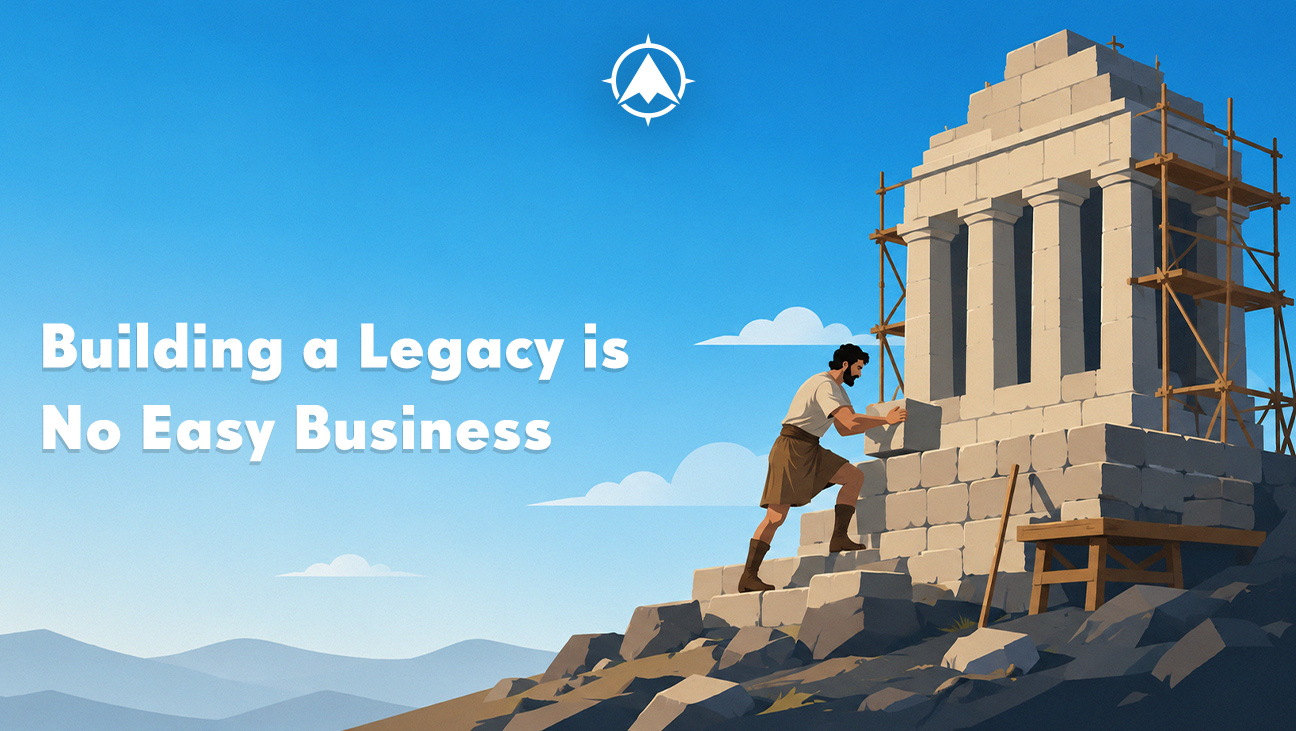
But no legacy comes easy. No legacy is built for free. The American legacy emerges from 250 years of struggle, conflict and discovering what those founding principles really mean.
Your organization is also building a legacy. Many organizations have more than 100-year histories of serving consumers. Some (extremely) notable examples include:
- The Bank of New York Mellon (founded by Alexander Hamilton in 1784)
- St. Mary’s Bank (actually a credit union founded in 1908)
- Caswell-Massey (a fragrance business started in 1752)
How do you build a legacy like these standout organizations? Well…it’s no easy business. But here are three cornerstone traits.
1. Timeless Principles
An organization backed by paper-thin vision and values doesn’t survive for a century or more. Your principles matter. If those principles are meaningless, staff just collects a paycheck and consumers don’t see why you differ from anyone else.
The biggest problem related to your principles is often that they become the lowest common denominator. Words in an employee handbook but not behaviors integral to hiring. A sentence on a website but not a guiding vision for each person’s work. “Golden retriever words” like “loyalty” and “integrity” that describe you but could describe anywhere.
Establish timeless principles today (if you don’t have them already). As Gino Wickman suggests, use them in hiring to make sure the right people are on the bus. Create a one-page guide found on every team member’s desk to remind them of the principles.
2. Timeless Service
An organization with inconsistent service doesn’t survive for a century or more. It’s not possible. Too many people would leave. As University of Toledo FCU CEO Greg Cook points out in a recent post, 68% of those who leave organizations do so because of an attitude of indifference by an employee.
Timeless service (in part driven by timeless brand principles) requires consistently excellent delivery. It’s a high standard, but it’s a standard the top-tier organizations meet.
Some quick tips to improve service consistency:
- Journey map and create a custom program you have ownership over
- Regularly train or enrich employees to prevent backsliding
- Create an internal recognition or awards system tied to the program
3. Timely Strategy
An organization with timeless strategy doesn’t survive for a century or more. A hallmark of good strategy is that it’s not timeless…it’s timely. It fits the moment and moves the organization into the future.
None of those three organizations mentioned earlier survived by staying the same. None stayed exclusively brick and mortar. Caswell-Massey, the fragrance business, stopped calling itself an “apothecary.” They all changed – they got websites, digital functionality and modern branding. Those changes undoubtedly sprang from strategic risks taken as time passed.
As you look ahead to your own planning session, what risks will you take? How will your strategy be timely rather than timeless?
The Time for Legacy Building is Now
It’s not too late to create a timeless organization. But it all begins with your strategic capabilities. Have a proactive planning session instead of one that looks backwards at your numbers and beats you over the head with data.
Plus, get an expert facilitator to help you lead it. We just brought another expert onto the On The Mark Strategies team, which means dates have opened for the fall. We also have dates for next year (it’s never too early to book). Book a consultation and let’s schedule you.
FAQS: BUILDING A LEGACY FOR YOUR ORGANIZATION
What does it take for an organization to build a 100-year legacy?
Three traits consistently appear in organizations that endure for a century or more: timeless principles that guide every hiring decision and daily behavior, consistently excellent service delivery and strategy that evolves with the times rather than staying fixed. Organizations like Bank of New York Mellon (founded in 1784 by Alexander Hamilton), St. Mary’s Bank (the first credit union in the U.S., founded in 1908) and Caswell-Massey (a fragrance company founded in 1752) all survived by holding firm to their core identity while adapting their strategy to each era.
Why do organizational values often fail to drive real behavior, and how do you fix it?
Most organizations have stated values that function as what might be called “golden retriever words” — terms like “loyalty” and “integrity” that sound meaningful but could describe any organization anywhere. When values live only in an employee handbook or on a website rather than shaping hiring, daily decisions, and leadership behavior, they become the lowest common denominator rather than a genuine differentiator. To fix this, organizations should establish specific, distinctive principles and then use them actively — in hiring to ensure cultural fit, and as a visible daily reference for every team member, not just a line in onboarding materials.
How does service consistency contribute to long-term organizational survival?
Inconsistent service is an organization-ending problem over time — too many consumers leave for it to be sustainable across decades. Research cited by University of Toledo FCU CEO Greg Cook indicates that 68% of those who leave organizations do so because of an attitude of indifference from an employee. Sustaining excellent service requires more than good intentions: it requires a documented member or customer journey, a branded service program the organization owns, regular training to prevent skill and attitude backsliding, and an internal recognition system tied to service standards.
What is the difference between timeless principles and timely strategy, and why does the distinction matter?
Principles should be timeless — the core values and identity that anchor an organization across generations. Strategy, however, should be timely, not timeless. Good strategy fits the current moment and moves the organization toward the future. None of the long-surviving organizations referenced above stayed the same: they abandoned outdated terminology, embraced digital channels, updated their branding and took calculated risks as the market changed around them. Confusing the two — treating strategy as permanent or treating principles as flexible — is a common path to irrelevance.
What should a strategic planning session look like for an organization focused on building a lasting legacy?
Legacy-building strategy requires a forward-looking planning process, not one that simply reviews past performance data. A proactive session asks what risks are worth taking, how strategy needs to adapt to the current moment and what changes will position the organization for relevance in the next decade — not just the next quarter. Working with an experienced outside facilitator helps leadership teams think beyond their defaults and have the harder, more generative conversations that internal-only sessions tend to avoid.