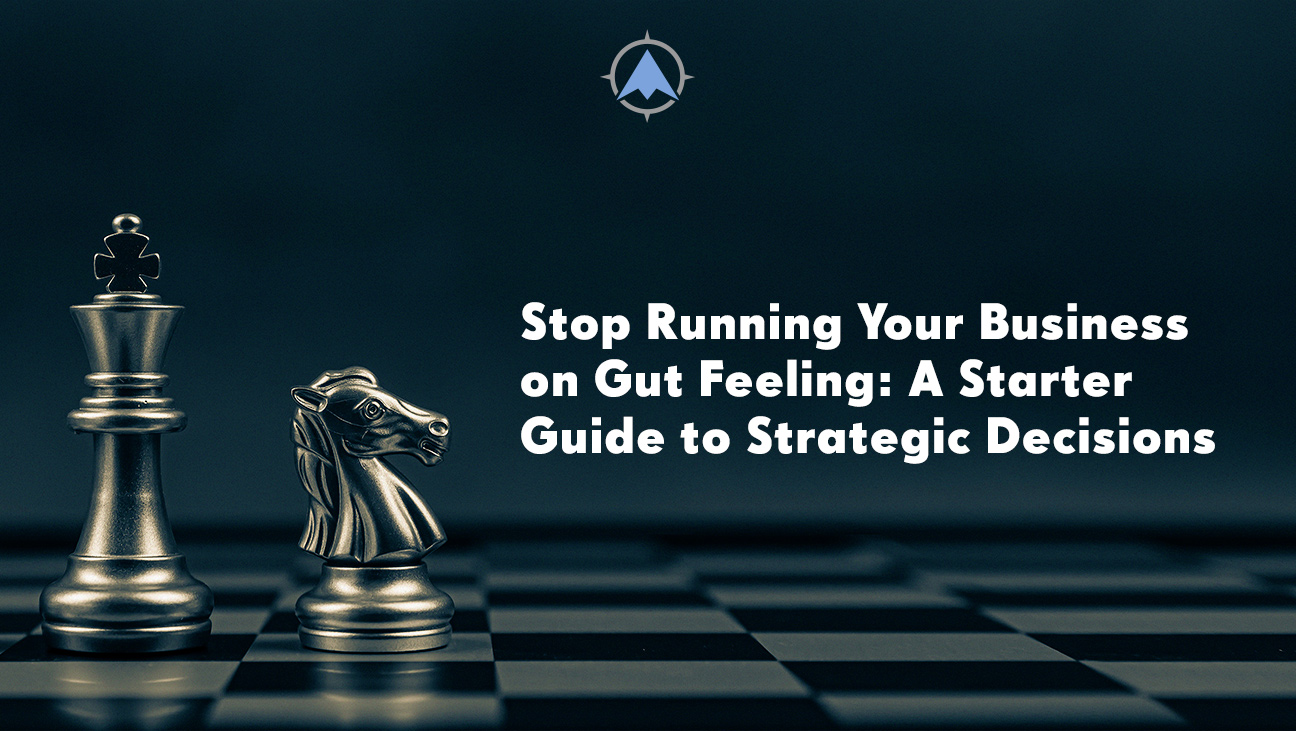
“Trust your gut.” You hear it all the time in business. And sure, intuition has its place. But your gut isn’t always reliable. Making decisions in the moment or without firmer small business strategic planning may not set you up for long-term success. Hope is not a strategy.
Peter Lynch puts it perfectly: “The trick is not to learn to trust your gut feelings, but rather to discipline yourself to ignore them. Stand by your stocks as long as the fundamental story of the company hasn’t changed.”
Replace “stocks” with “strategy,” and you’ve got the foundation for small business strategic planning. You need a plan. Not hunches, not wishful thinking, not reacting to whatever crisis showed up today.
So, where do you start? Here are three essential elements of effective small business strategic planning.
1. Make a focused plan with three-to-five goals.
48% of businesses fail to complete half their strategic goals. Why? Because they set too many. You can’t chase fifteen priorities at once. When everything is important, nothing is important.
A focused strategic plan identifies max three-to-five key goals. These aren’t vague aspirations like “grow revenue” or “improve customer satisfaction.” They’re specific objectives.
Maybe it’s launching two new products by Q3. Maybe it’s expanding into a new market or reducing customer acquisition costs by 20%. Whatever the goals are, they should be ambitious enough to matter but focused enough to actually accomplish.
The math is simple: fewer goals mean more resources directed at each one. More resources mean higher likelihood of success. Resist the urge to add “just one more thing” to the plan. Focus wins.
2. Do unique planning exercises.
If you’re still using the SWOT analysis as your primary planning tool, it’s time to retire it. The SWOT tells you things you already know. Strengths? You know them. Weaknesses? You definitely know them. Opportunities and threats? You’ve been thinking about them for months.
Effective small business strategic planning requires exercises that push your thinking beyond the obvious. That’s why we use unique exercises with our planning clients.
Try a strategic growth matrix to evaluate which markets and products deserve investment. Conduct a niche discussion to identify underserved segments you could dominate. Use scenario planning to stress-test your strategy against different futures.
The goal isn’t novelty for novelty’s sake. It’s to surface insights you wouldn’t get from the same tired exercises you did for years. Fresh exercises lead to fresh thinking. Fresh thinking leads to better strategy.
3. Make strategic planning a routine (not a day on the calendar).
48% of leaders (what’s with the number 48 when it comes to strategic problems?) spend less than one day per month on strategy. Think about that. Strategy – the thing that determines whether your business thrives or dies – gets less than 2% of their time.
Too many small businesses treat strategic planning like an annual event. They block off a weekend, hash out a plan, file it away and get back to fighting fires. Then they wonder why nothing changes. Strategic planning isn’t a retreat you attend once a year. It’s a discipline you practice regularly.
Build strategy time into your routine. A monthly review of key metrics and progress toward goals. A quarterly session to reassess priorities and make adjustments. Or a weekly reflection on whether your daily activities align with your strategic objectives. Whatever the cadence, make it consistent.
Strategy isn’t something you do once and forget. It’s something you live, refine and revisit constantly. The businesses that win are the ones that treat strategic planning as a process, not a date on the calendar.
Your Gut is Not a Strategy
Your gut has gotten you this far. But if you want to build something sustainable, you need more than instinct. You need small business strategic planning that’s focused, fresh and woven into the fabric of how you operate.
Three to five goals. Unique exercises. Regular rhythm. Start there, and you’re already ahead of most of your competition.
We facilitate strategic planning sessions that hit on all those points. Book a free consultation today and schedule your session.